Instrument Playspace
What happens when we write the brief ourselves.
Some of Instrument’s most impactful creative breakthroughs didn’t begin with a brief. They started with a simple question of “what if?”
Play as practice
What started as a question—how might we interact with 20 years of archival material in a more spatial, living way?—became something bigger: the engine behind Instrument’s 20th anniversary hype reel and a reusable creative tool, Concentric, built for ongoing exploration, animation, and making.
But the project also surfaced something larger. Some of Instrument’s most useful tools weren’t coming from formal briefs. They were growing out of experimentation. Small “what if?” explorations that evolved from one-off tinkering into creative infrastructure teams wanted to keep using.
Playspace became a home for these ideas: a space for Instrument’s designers, creative technologists, and thinkers to build, test, and share the tools and experiments shaping how we work.

Typ-o-matic Featured in Slanted Magazine

Bitmapper Featured in Slanted Magazine
Powered by curiosity
As a culture of makers, play isn’t separate from work.
It’s often where the work begins. Experimentation has been part of our DNA since day one. Ideas worth pursuing never require a formal brief to exist—they just need enough curiosity to make them happen.
If an exploration reveals a faster workflow, a more expressive interaction, or a way to help more people make things, it’s worth building.
That mindset became the mantra behind Playspace:
- Discovery as process
- Experimentation as infrastructure
- Tools as creative outputs
- Prototypes as strategic assets
Playspace is the visible expression of that philosophy: a space where ideas in motion evolve into tools, systems, and creative capabilities that extend far beyond their original intent.
0
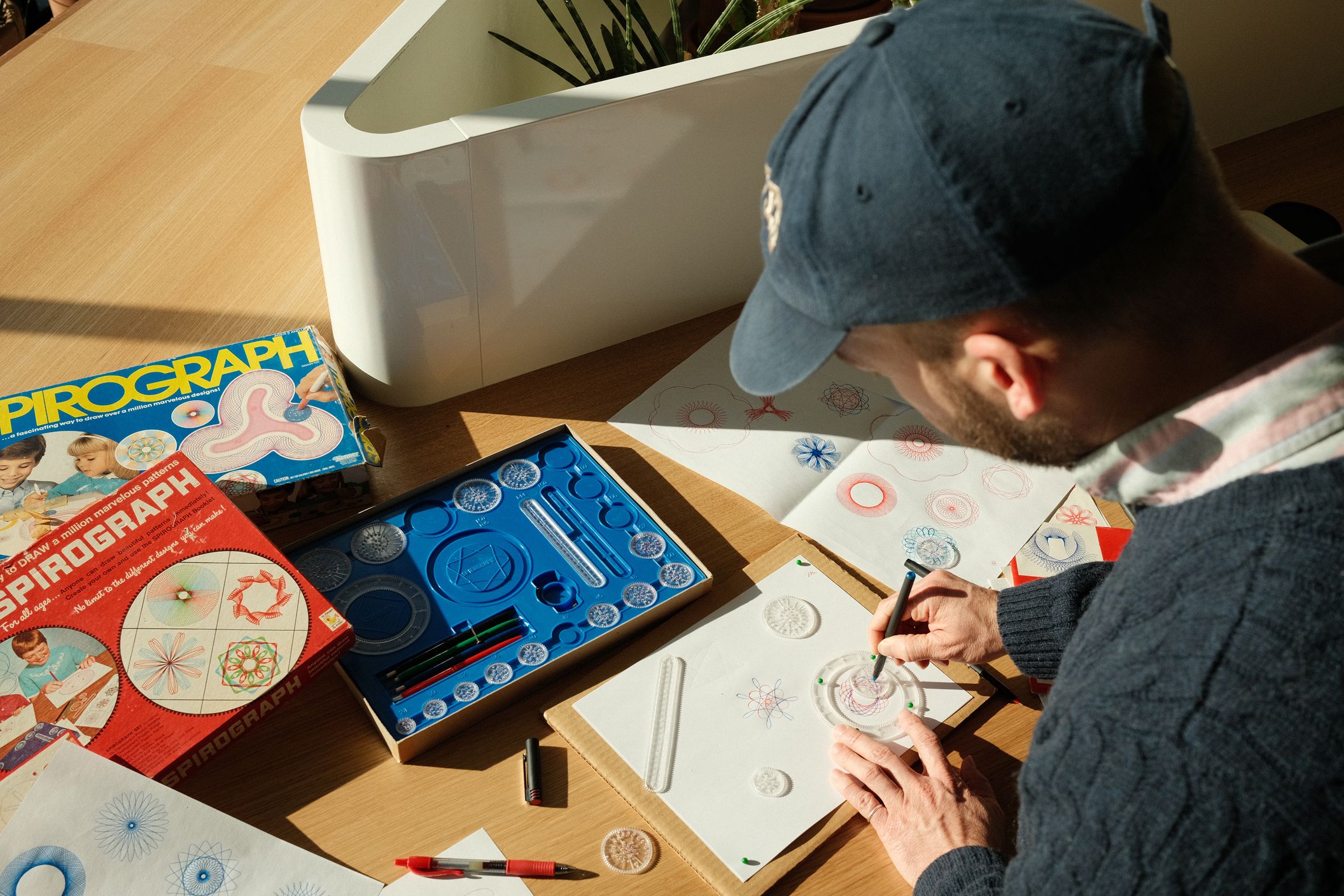
Matthew Ward working on Spirographer

Made with Typ-o-matic

Made with Typ-o-matic
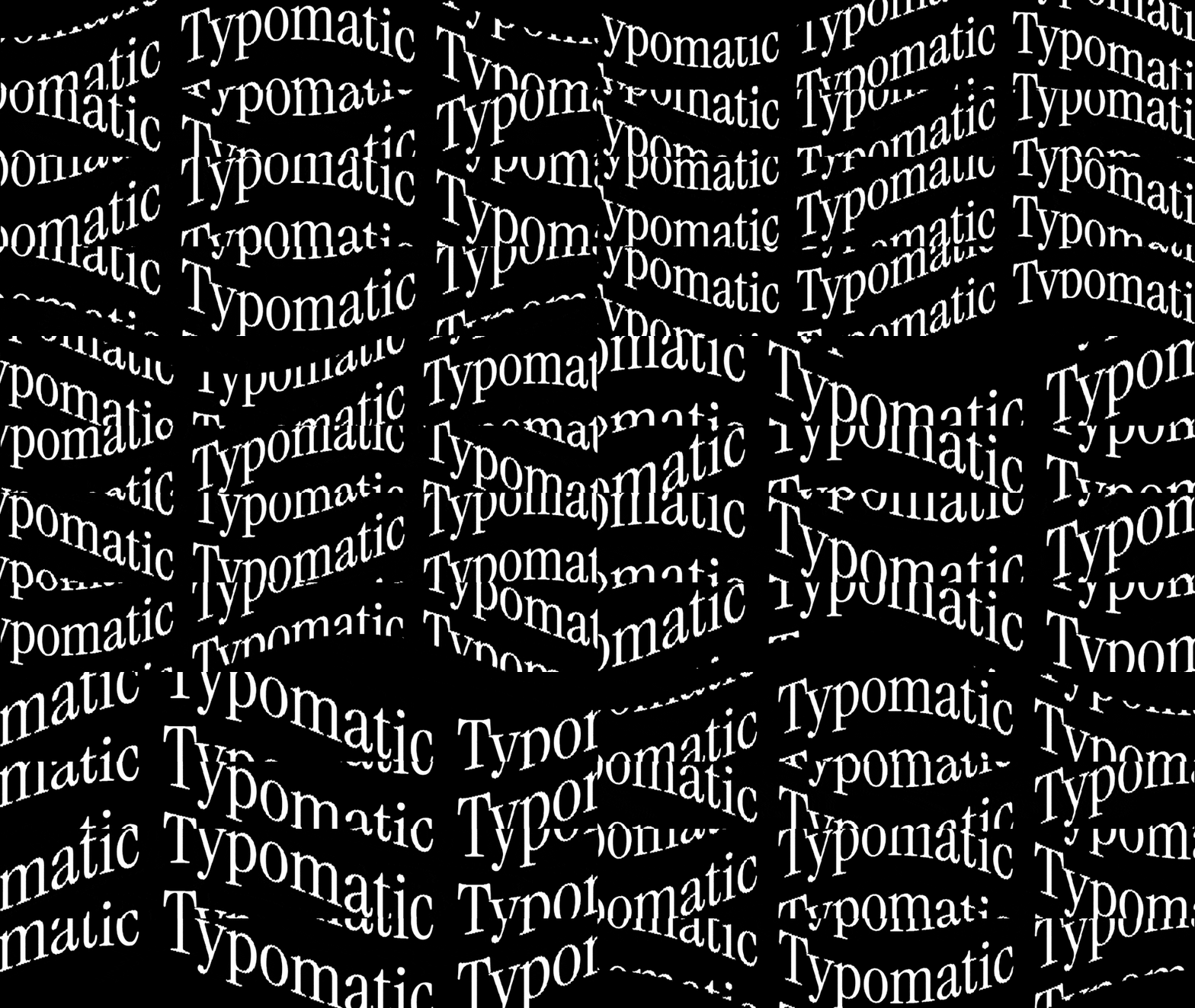
Made with Typ-o-matic


Built to Enable
The value of these tools isn’t just speed or efficiency. It’s access.
Many of the things living on Playspace are designed to lower the barrier between having an idea and being able to make something from it. Workflows that once required specialized creative or technical expertise become more accessible to more people. That’s a meaningful shift.
The goal isn’t to automate creativity. It’s to create more opportunities for it. It’s about removing friction from the parts of the process that slow ideas down and give more people the ability to explore, prototype, iterate, and contribute.
Some tools accelerate production. Others unlock entirely new ways of working. But all of them are built around the same belief: when more people can make, better ideas have room to emerge.
Typ-o-matic by Lorraine Li
Typ-o-matic is an experimental tool for generating looping typographic animations through pixel displacement. Built as a live, interactive system, each layer—typography, displacement, and output—can be adjusted in real time, creating a playground for generative motion, rhythm, and form.
Originally developed as an exploration in expressive type movement, the tool evolved into a flexible creative utility that allows rapid experimentation and iteration without traditional motion-production overhead.
Vortex by Vivek Thakker
→Vortex
Vortex is an interactive 3D animation tool built with Three.js, inspired by the dynamic movement and form of a vortex. Designed for playful, highly expressive experimentation, the tool gives users deep creative control over flowing strands, particle systems, typography, and image-based compositions.
Users can bend, twist, animate, and customize visual forms directly in the browser—generating everything from blooming particle fields to spiraling typographic systems and immersive textured environments. What begins as a motion experiment quickly becomes a flexible canvas for visual exploration.
Like many tools within Playspace, Vortex blurs the line between utility and experimentation: part creative sandbox, part production-ready animation system.
Spirographer by Matthew Ward
→Spirographer
A spirograph for the digital age. Built upon the simple joy of watching swirly lines create something hypnotic. Get wavey, watch it draw, and export your creation to use however and wherever you'd like.
Concentric by Vivek Thakker
→Concentric
Concentric is an interactive 3D animation tool originally created to produce the motion graphic behind Instrument’s 20th anniversary celebration. Built to simplify the complexity of creating large-scale 3D gallery animations from hundreds of images, the tool transforms what would typically be a highly manual production process into a customizable and expressive visual system.
Users can choreograph, animate, and export immersive 3D gallery scenes directly from the browser, making spatial storytelling faster, more accessible, and more iterative by design.
What began as a one-off experiment evolved into an ongoing creative utility: a tool built not just to produce a single outcome, but to enable continued exploration, motion-making, and visual experimentation long after the original project ended.
IMGshfflr by Vivek Thakker
→IMGShfflr
IMMGShfflr is a tool built for rapid experimentation with carousel-based animation systems. Designed to handle everything from a handful of assets to entire media libraries, it allows users to feed in images or videos and instantly explore movement, pacing, and sequencing across different animation styles.
What might normally require extensive motion setup becomes immediate, interactive, and exploratory, turning production constraints into opportunities for discovery.
Playspace allows us to test and showcase creative ideas when we get to write the brief ourselves. It gives us a place to scratch itches, prove theories, and explore ideas that might not have an immediate home, but can later become capabilities, tools, or starting points for client work.

2026 FastCo Innovation by Design Nominee in Experimental & Conceptual Design

2026 W3 Awards Best in Show for Generative AI Application
2026 W3 Awards 3x Winner across AI, Immersive, & Software